Invisalign & Orthodontist in Geneva: Complete Guide 2026
Whether you are an expat who just arrived in Geneva or a long-time resident finally ready to straighten your teeth, choosing the right orthodontic treatment can feel overwhelming. Invisalign, traditional braces, ceramic braces, lingual braces, clear aligners -- the options keep multiplying, and so do the questions about cost, duration, and which Geneva orthodontist to trust with your smile.
This guide answers every question we hear from patients in Geneva. We cover how each treatment works, what it costs in Swiss francs, how long it takes, who qualifies, how Swiss dental insurance applies, and exactly what to look for when choosing an orthodontist in Geneva. No marketing fluff -- just the practical information you need to make a confident decision.
Orthodontic Treatment Options Compared
Before diving into specifics, here is a high-level comparison of every orthodontic treatment available in Geneva. Each has distinct strengths, and the best choice depends on your diagnosis, lifestyle, and budget.
| Treatment | Cost (CHF) | Duration | Visibility | Best For |
|---|---|---|---|---|
| Invisalign | 4,500 - 9,500 | 6 - 18 months | Nearly invisible | Mild to moderate crowding, spacing, adults |
| Metal Braces | 5,000 - 8,000 | 12 - 24 months | Visible | Complex cases, severe malocclusion |
| Ceramic Braces | 5,000 - 8,500 | 12 - 24 months | Discreet (tooth-colored) | Complex cases with aesthetic priority |
| Lingual Braces | 8,000 - 12,000 | 18 - 30 months | Invisible (behind teeth) | Any complexity, total discretion required |
| Other Clear Aligners | 3,500 - 7,000 | 6 - 18 months | Nearly invisible | Mild cases, budget-conscious patients |
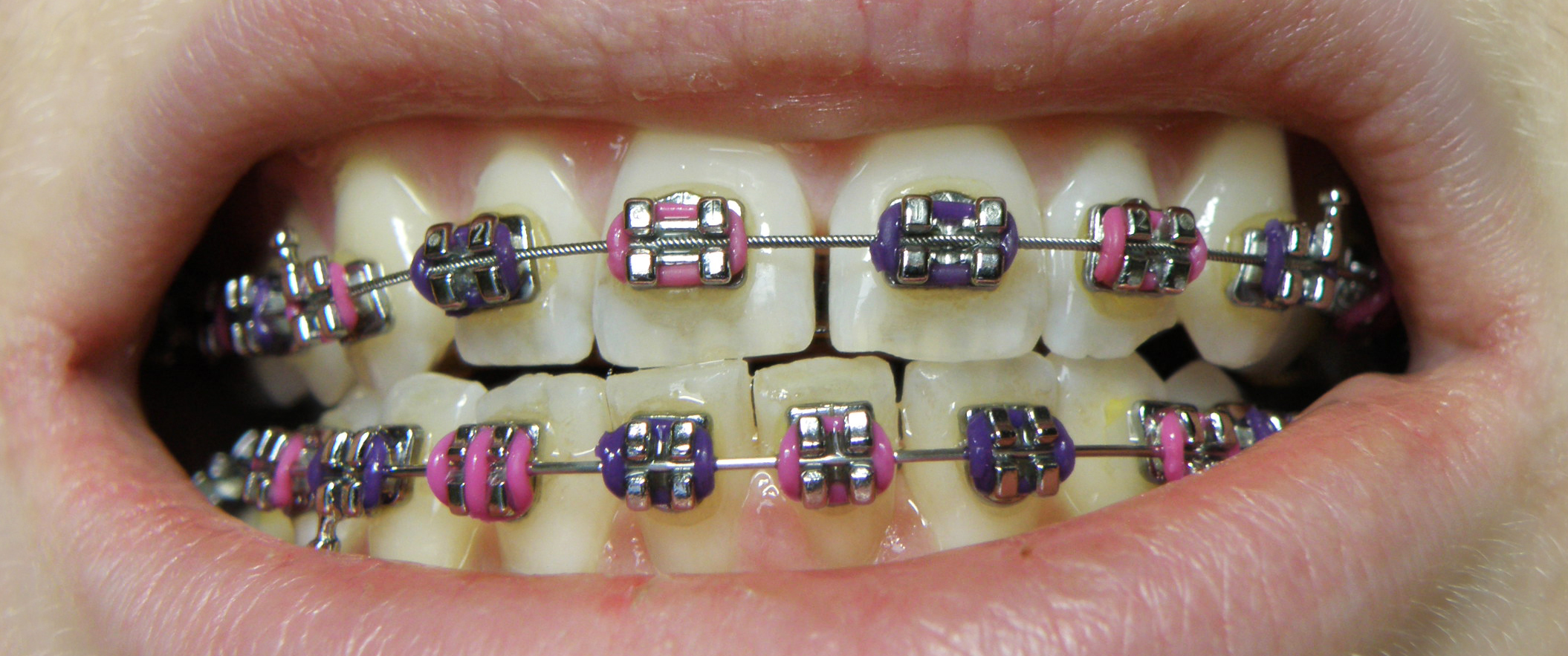
Metal braces remain the gold standard for complex orthodontic cases. They offer the most precise tooth movement control and can treat conditions that aligners simply cannot, including severe rotations, large vertical discrepancies, and complex bite corrections. Modern brackets are significantly smaller and more comfortable than those from even ten years ago.
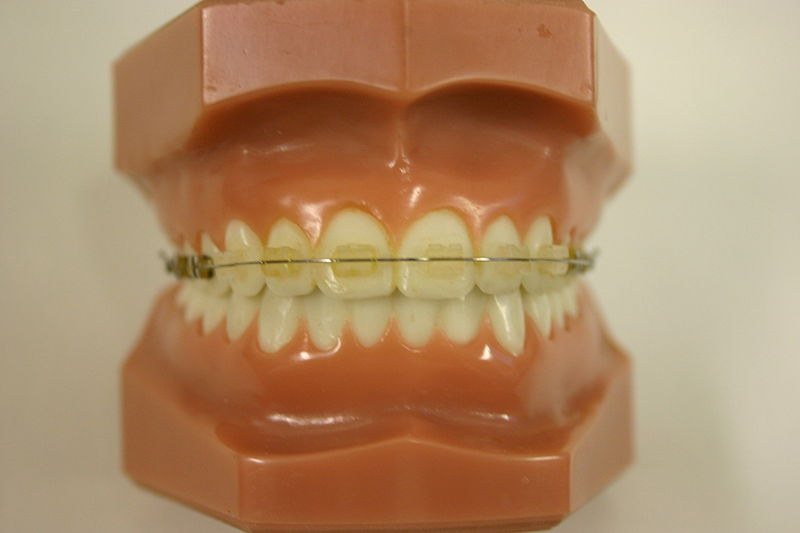
Ceramic braces function identically to metal braces but use tooth-colored or clear brackets. They cost roughly CHF 500-1,000 more than metal braces and are slightly more fragile, but many adult patients prefer the aesthetic compromise. The archwire can also be tooth-colored for even greater discretion.
Lingual braces are bonded to the inside (tongue-side) of the teeth, making them completely invisible from the outside. They are the most expensive option and require a highly specialized orthodontist. Treatment takes longer because the mechanics are more complex. In Geneva, only a handful of orthodontists offer custom lingual systems like Incognito or WIN.
Invisalign Geneva: How It Works
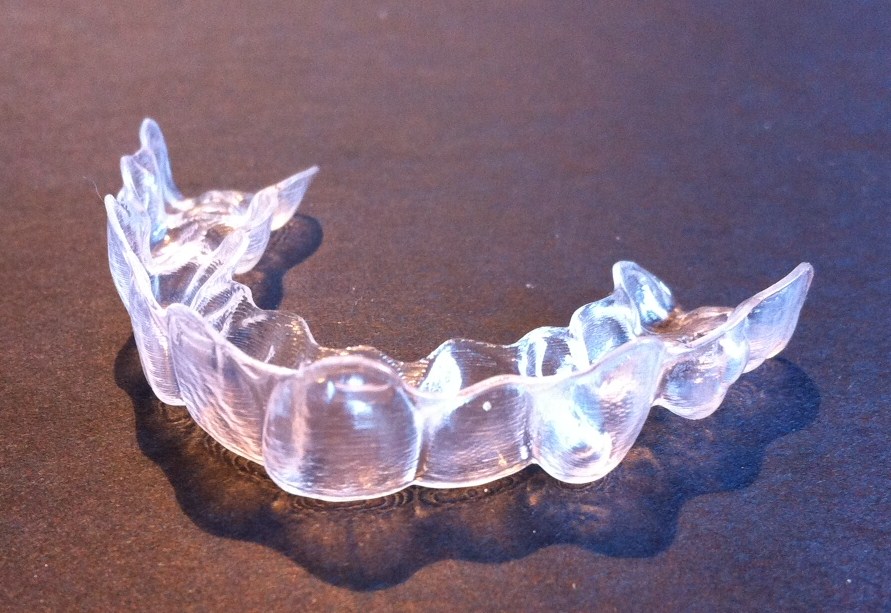
Invisalign is the world's most recognized clear aligner brand, developed by Align Technology (founded 1997, headquartered in Tempe, Arizona). Over 17 million patients worldwide have been treated with Invisalign as of 2025. In Geneva, it is by far the most requested orthodontic treatment among adults.
Here is exactly what happens during Invisalign treatment in Geneva, step by step:
- Initial consultation (30-60 min): Your orthodontist examines your teeth, takes X-rays (panoramic and cephalometric), photographs, and discusses your goals. Many Geneva practices offer this consultation free of charge or for CHF 50-150.
- Digital scan (15-20 min): Instead of messy impressions, a 3D intraoral scanner (iTero) captures a precise digital model of your teeth. This is painless and takes about 15 minutes.
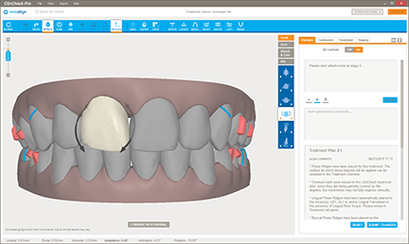
- ClinCheck treatment plan: Using Align Technology's proprietary ClinCheck software, your orthodontist designs your entire treatment virtually. You can see a 3D simulation of how your teeth will move at each stage -- from current position to final result. This is one of Invisalign's biggest advantages: you see the predicted outcome before committing.
- Aligner fabrication: Once you approve the ClinCheck plan, your custom aligners are manufactured at Align Technology's facility. Expect 2-4 weeks for delivery to your Geneva practice.
- Attachment placement: Small tooth-colored composite "bumps" (attachments) are bonded to specific teeth. These give the aligners grip to move teeth in ways that flat plastic alone cannot. Not every tooth needs an attachment.
- Wearing aligners: You receive several sets of aligners at once and change to a new set every 1-2 weeks. Each set moves your teeth approximately 0.25mm. You must wear them 20-22 hours per day, removing only for eating, drinking (anything besides water), and brushing.
- Check-ups (every 6-8 weeks): Your orthodontist monitors progress, provides new aligner sets, and may adjust the plan. With Invisalign's Dental Monitoring app, some Geneva practices now offer remote check-ins between visits.
- Refinements: If teeth have not tracked perfectly to plan, your orthodontist orders additional "refinement" aligners at no extra cost (included in Invisalign Comprehensive). This is normal and happens in roughly 70-80% of cases.
- Retention: Once treatment is complete, you transition to retainers to maintain results permanently.
Invisalign Product Tiers
| Product | Aligners | Cost (CHF) | Ideal For |
|---|---|---|---|
| Invisalign Comprehensive | Unlimited | 6,500 - 9,500 | Complex crowding, bite issues, full treatment |
| Invisalign Moderate | Up to 26 | 5,000 - 7,000 | Moderate crowding or spacing |
| Invisalign Lite | Up to 14 | 3,500 - 5,500 | Minor crowding, relapse after braces |
| Invisalign Express | Up to 7 | 2,500 - 4,000 | Very minor corrections, single arch |
| Invisalign First (children) | Varies | 4,000 - 6,500 | Phase 1 treatment for children 6-10 |
Clear Aligners Geneva: Beyond Invisalign
While Invisalign dominates the clear aligner market, it is not the only option available in Geneva. Several alternative systems offer comparable results, sometimes at a lower price point.
ClearCorrect (owned by Straumann, a Swiss dental company headquartered in Basel) is a popular alternative. It uses a similar tray-based system and is often 10-20% less expensive than Invisalign. Some Geneva orthodontists prefer it for mild-to-moderate cases because of the flexibility in ordering individual aligners.
Angel Aligner and Spark Aligners (by Ormco) are newer entrants with growing presence in Switzerland. Spark uses TruGEN material, which the manufacturer claims is clearer and more stain-resistant than Invisalign's SmartTrack.
Important warning about direct-to-consumer aligners: Companies like SmileDirectClub (now bankrupt) and similar mail-order services bypass in-person orthodontic supervision. The Swiss Society of Orthodontists (SSO -- Schweizerische Gesellschaft fur Kieferorthopadie) strongly advises against unsupervised aligner treatment. Without proper diagnosis, X-rays, and monitoring, these services can cause irreversible damage including root resorption, gum recession, and bite problems. Always choose a treatment supervised by a qualified orthodontist in person.
Brackets Geneve: Les Appareils Dentaires Traditionnels
For French-speaking patients searching for "brackets Geneve" or "appareil dentaire Geneve," this section covers what you need to know about traditional fixed orthodontic appliances available in Geneva.
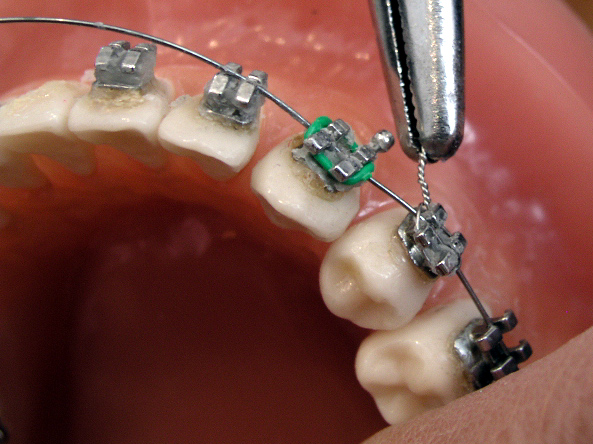
Traditional brackets (whether metal or ceramic) are bonded directly to each tooth. An archwire connects the brackets and provides the force that moves teeth into alignment. Your orthodontist adjusts the wire at each appointment, progressively guiding teeth to their final positions.
Modern bracket systems available in Geneva include:
- Self-ligating brackets (Damon, Empower): Use a built-in clip instead of elastic ties, reducing friction and potentially shortening treatment time by 2-6 months.
- Mini brackets: 30% smaller than conventional brackets, more comfortable and less visible.
- Customized brackets (Insignia, SureSmile): Digitally designed for each patient, similar to how Invisalign customizes each aligner.
- Lingual brackets (Incognito, WIN): Placed on the tongue-side of teeth, completely invisible from the outside.
In Geneva, most orthodontists are bilingual (French/English) and can explain treatment options in both languages. When searching for "brackets Geneve," you will find the same specialists listed under "braces Geneva" in English.
Invisalign Geneve: Guide pour les Francophones
Si vous cherchez "Invisalign Geneve" en francais, voici les points essentiels. Invisalign est disponible dans la plupart des cabinets d'orthodontie a Geneve. Les prix varient entre CHF 4'500 et CHF 9'500 selon la complexite du cas.
For English-speaking readers: this section exists because "Invisalign Geneve" (the French spelling of Geneva) is a heavily searched term. The treatment itself is identical regardless of language -- the same Invisalign system, same ClinCheck planning, same Swiss orthodontists. If you prefer a consultation in English, simply request it when booking. Nearly all Geneva orthodontists are fluent in both languages, and many also speak German, Italian, or Spanish.
Key vocabulary for navigating orthodontic appointments in French:
- Orthodontiste -- Orthodontist
- Appareil dentaire -- Dental braces / orthodontic appliance
- Gouttiere transparente -- Clear aligner tray
- Contention -- Retainer / retention
- Empreinte numerique -- Digital scan / impression
- Malocclusion -- Malocclusion (same in both languages)
- Devis -- Treatment cost estimate / quote
Treatment Timeline: How Long Does It Take?
Treatment duration depends on the complexity of your case and the system used. Here are realistic timelines based on common scenarios seen by Geneva orthodontists:
| Case Type | Invisalign | Braces | Lingual |
|---|---|---|---|
| Minor crowding / spacing | 3 - 6 months | 6 - 12 months | 8 - 14 months |
| Moderate crowding | 8 - 14 months | 12 - 18 months | 14 - 22 months |
| Overbite / underbite correction | 12 - 18 months | 14 - 24 months | 18 - 30 months |
| Complex (extraction case) | 14 - 24 months | 18 - 30 months | 24 - 36 months |
Factors that extend treatment time: Poor compliance with aligner wear (less than 20 hours/day), missed appointments, complex root movements, and the need for refinement aligners. Conversely, treatment can be shorter than estimated if teeth respond well and the patient is diligent about wearing aligners or maintaining elastic wear with braces.
Check-up frequency: With braces, expect appointments every 4-6 weeks. With Invisalign, appointments are typically every 6-10 weeks because multiple aligner sets are given at once. Some Geneva practices using Dental Monitoring (AI-powered remote tracking) can extend intervals to 12 weeks for compliant patients.
Orthodontic Treatment Costs in Geneva (CHF)
Geneva is one of the most expensive cities in the world, and dental care reflects this. However, orthodontic prices in Geneva are broadly comparable to Zurich, Basel, and other Swiss cities. Here is what you can expect to pay:
| Treatment | Price Range (CHF) | What's Included |
|---|---|---|
| Initial consultation | 0 - 150 | Examination, preliminary assessment, quote |
| Diagnostic records | 300 - 600 | X-rays, photos, digital scan, analysis |
| Invisalign Comprehensive | 6,500 - 9,500 | Unlimited aligners, refinements, all appointments |
| Invisalign Lite | 3,500 - 5,500 | Up to 14 aligners, 1 refinement round |
| Metal braces (full) | 5,000 - 8,000 | All brackets, wires, adjustments, removal |
| Ceramic braces (full) | 5,000 - 8,500 | Tooth-colored brackets, all appointments |
| Lingual braces | 8,000 - 12,000 | Custom brackets, specialized adjustments |
| Retainers (after treatment) | 300 - 800 | Fixed wire and/or removable retainer |
Payment plans: Most Geneva orthodontists offer interest-free payment plans spreading costs over the treatment duration. A typical arrangement is 30% upfront, with the remainder split into monthly installments. Always ask about payment options during your initial consultation.
Cross-border treatment: Some Geneva residents consider treatment in nearby Annemasse or Thonon-les-Bains (France), where prices can be 30-50% lower. However, the French social security reimbursement only applies to French residents. Swiss patients pay full price in France and cannot claim it back through Swiss insurance. Factor in travel time and the risk of complications before choosing this route.
Who Is a Candidate for Orthodontic Treatment?
Orthodontic treatment can address a wide range of dental and skeletal issues. Here are the most common conditions treated by Geneva orthodontists:
- Crowding: The most common reason for orthodontic treatment. When teeth overlap because the jaw is too small to accommodate them. Treatable with all methods, though severe crowding may require extractions before alignment.
- Spacing (gaps): Gaps between teeth, whether from missing teeth, small teeth, or jaw size discrepancies. Invisalign is particularly effective for closing small to moderate gaps.
- Overbite (deep bite): Upper front teeth overlap lower teeth excessively. Mild overbites can be treated with Invisalign; severe cases typically require braces, sometimes with bite plates or elastics.
- Underbite: Lower teeth sit in front of upper teeth. This is often a skeletal issue and may require braces combined with jaw surgery (orthognathic surgery) for adult patients. Early treatment in children (age 7-9) can sometimes redirect jaw growth and avoid surgery.
- Crossbite: One or more upper teeth bite inside the lower teeth. Can be anterior (front) or posterior (back). Often treated with expanders in children or braces/aligners in adults.
- Open bite: Front teeth do not meet when biting down. Often caused by thumb-sucking or tongue thrust habits. One of the hardest conditions to treat and has the highest relapse rate. Braces are generally preferred over Invisalign for open bite correction.
Contraindications: Active periodontal (gum) disease must be treated before starting orthodontics. Uncontrolled diabetes, certain medications (bisphosphonates), and severe bone loss can complicate or prevent treatment. Your orthodontist will assess these factors during the initial examination.
Orthodontic Treatment: Teens vs Adults
Children and teens (age 7-17): The Swiss Society of Orthodontists recommends a first orthodontic evaluation at age 7. This does not mean treatment starts at 7 -- it means potential problems can be identified early. Phase 1 treatment (ages 7-10) uses expanders, partial braces, or Invisalign First to guide jaw growth. Full treatment (phase 2) typically begins once all permanent teeth have erupted, around ages 11-14.
Teens have a biological advantage: their bones are still growing, making teeth easier to move and certain jaw corrections possible without surgery. Invisalign Teen includes compliance indicators (blue dots on aligners that fade with wear) to help parents and orthodontists verify the teen is wearing the aligners enough.
Adults (18+): There is no upper age limit for orthodontic treatment. Geneva orthodontists routinely treat patients in their 40s, 50s, and 60s. However, adult treatment has some differences:
- Treatment takes 10-20% longer on average because adult bone is denser and less responsive than adolescent bone.
- Gum and bone health must be carefully assessed. Adults are more likely to have periodontal issues that need treatment first.
- Root resorption (slight shortening of tooth roots) is a risk in all orthodontic treatment but is more common in adults. Your orthodontist will monitor this with periodic X-rays.
- Jaw surgery may be needed for skeletal discrepancies that cannot be corrected with braces alone in adults (growth modification is only possible in children).
- Adults overwhelmingly prefer Invisalign or ceramic braces for aesthetic reasons. In Geneva, roughly 75% of adult patients choose Invisalign.
How to Choose an Orthodontist in Geneva
Not all dentists who offer Invisalign or braces are orthodontists. In Switzerland, a specialist orthodontist has completed dental school (5 years) plus an additional 4-year postgraduate residency in orthodontics, recognized by the Swiss Medical Association (FMH). Look for the title "Spezialist fur Kieferorthopadie SSO" or "Specialiste en orthodontie SSO."
Here is what to evaluate when choosing your orthodontist:
- SSO specialist certification: Verify they are a registered specialist, not just a general dentist offering orthodontic treatment. The SSO website has a search function.
- Invisalign provider tier: Align Technology classifies doctors by annual case volume. Diamond (150+ cases/year) and Platinum (80+ cases/year) providers have the most experience with complex Invisalign cases. This information is on the Invisalign.ch doctor finder.
- Technology: A modern practice should have a 3D intraoral scanner (iTero, TRIOS, or Medit), digital X-ray/CBCT, and ClinCheck or equivalent 3D treatment planning. Practices still using alginate impressions for Invisalign are behind the standard of care.
- Before/after gallery: Ask to see treated cases similar to yours. A confident orthodontist will show you results. If they hesitate, consider why.
- Treatment plan transparency: You should receive a detailed written estimate (devis) before treatment begins, listing every cost. In Switzerland, the tariff system (Dentotar/Tarmed) standardizes many dental fees, but orthodontic treatment plans are often quoted as a package.
- Reviews and reputation: Check Google Reviews, but read critically. Look for comments about the orthodontist specifically (not just the receptionist) and patterns in complaints. A practice with 200+ reviews at 4.7+ stars is generally reliable.
English-Speaking Orthodontists for Expats in Geneva
Geneva hosts the European headquarters of the United Nations, the World Health Organization, the Red Cross, CERN, and hundreds of multinational companies. Roughly 48% of Geneva's population are foreign nationals. As a result, the demand for English-speaking healthcare providers is enormous -- and the supply is excellent.
Finding an English-speaking orthodontist in Geneva is straightforward. Most orthodontists in central Geneva (Eaux-Vives, Plainpalais, Rive, Champel) speak fluent English. Many trained at international universities (UK, US, Germany) and conduct consultations in English daily.
Tips for expats navigating orthodontic care in Geneva:
- Confirm language at booking: When calling, simply ask: "Do you offer consultations in English?" Staff will confirm immediately.
- International insurance: If you have employer-provided international health insurance (Cigna, Allianz, BUPA), orthodontic coverage varies widely. Some corporate plans cover orthodontics for dependents. Check your policy before the first appointment.
- Transferring treatment: If you started orthodontic treatment in another country and relocated to Geneva, most orthodontists can continue your treatment. Bring all records (X-rays, photos, treatment notes). Invisalign cases are especially easy to transfer because the digital records are stored centrally by Align Technology.
- Neighborhoods popular with expats tend to have the most English-friendly practices: Champel, Eaux-Vives, Paquis (near Nations), Florissant, and Cologny.
Swiss Dental Insurance for Orthodontics
Understanding Swiss dental insurance for orthodontics is critical because the basic mandatory health insurance (KVG/LAMal) does NOT cover orthodontics except in very specific circumstances (severe congenital defects, cleft palate, or medically necessary jaw surgery).
Here is how coverage actually works:
- Basic insurance (KVG/LAMal): No orthodontic coverage. Period. This applies to all residents regardless of insurer.
- Supplementary dental insurance (LCA/VVG): This is voluntary private insurance. Many plans cover 50-75% of orthodontic treatment for children under 18, up to a lifetime maximum (typically CHF 5,000-15,000). Coverage for adults is rare and limited.
- Critical catch -- waiting periods: Most supplementary dental insurance has a 12-24 month waiting period before orthodontic benefits kick in. You cannot buy insurance the month before starting treatment and expect coverage. Plan ahead -- ideally, take out dental insurance for your children at birth or shortly after.
- Popular Swiss insurers with orthodontic coverage: Helsana (Completa), CSS (Dental Premium), Swica (Completa Top), Groupe Mutuel (Dental Max). Compare plans carefully because maximums and reimbursement percentages vary significantly.
- Tax deductions: In Switzerland, dental expenses exceeding 5% of your net income can be deducted from federal and cantonal taxes. Keep all receipts and the orthodontist's invoices for your tax declaration.
AI/IV disability insurance: If a child has a recognized congenital condition affecting jaw or dental development (listed in the AI/IV catalog), treatment may be fully covered by Swiss disability insurance. Your orthodontist can advise if this applies to your child's case.
Retention After Orthodontic Treatment
Retention is arguably the most important -- and most neglected -- phase of orthodontic treatment. Without retainers, teeth WILL shift back toward their original positions. This is not a maybe; it is a biological certainty. The periodontal ligament fibers that surround each tooth retain "memory" of the original tooth position for years after treatment.
Geneva orthodontists typically recommend a combination of:
- Fixed retainer (bonded wire): A thin wire bonded to the back of the lower front teeth (and sometimes upper). It stays in place permanently (or at least 5-10 years). Cost: CHF 200-400 per arch. Maintenance: floss around it with a floss threader or Superfloss.
- Removable retainer (Essix/Vivera): A clear plastic tray similar to an Invisalign aligner, worn at night. Invisalign's Vivera retainers are made from the same SmartTrack material and are available as a set of 3-4 retainers. Cost: CHF 300-500 for a set.
- Hawley retainer: The classic acrylic-and-wire retainer. Less common today but still used in some cases, especially for children.
How long to wear retainers: The current consensus among orthodontists is "as long as you want straight teeth." Realistically, this means:
- First 6 months after treatment: wear removable retainer full-time (22 hours/day)
- Months 6-12: wear at night only
- Year 2+: wear 3-5 nights per week indefinitely
- Fixed retainer: keep indefinitely, check at dental cleanings
Frequently Asked Questions
How much does Invisalign cost in Geneva?
Invisalign treatment in Geneva typically costs between CHF 4,500 and CHF 9,500, depending on complexity. Invisalign Lite for minor corrections starts around CHF 3,500, while Invisalign Comprehensive for complex cases can reach CHF 9,500 or more. Most practices offer interest-free payment plans.
Is Invisalign covered by Swiss insurance?
Basic Swiss health insurance (KVG/LAMal) does not cover orthodontics for adults. Supplementary insurance (LCA/VVG) may cover 50-75% for children under 18, up to a lifetime maximum. Adults must pay out of pocket in almost all cases. Dental expenses above 5% of net income are tax-deductible.
How long does Invisalign treatment take?
Treatment typically takes 6 to 18 months. Simple cases may finish in 6 months with Invisalign Lite. Complex cases involving bite correction can take 18 months or longer. Compliance with 20-22 hours/day wear time is the biggest factor in staying on schedule.
Can I find an English-speaking orthodontist in Geneva?
Yes, easily. Geneva is an international city and most orthodontists speak fluent English alongside French. Practices in Champel, Eaux-Vives, Paquis, and near international organizations are especially accustomed to English-speaking patients.
What is the difference between Invisalign and other clear aligners?
Invisalign is a specific brand by Align Technology. Alternatives include ClearCorrect (Straumann), Spark (Ormco), and Angel Aligner. Invisalign's advantages are its patented SmartTrack material, ClinCheck 3D planning, and the largest clinical evidence base. Other brands can be 10-20% cheaper and are effective for mild-to-moderate cases.
Are traditional braces better than Invisalign?
Neither is universally better. Braces excel at complex cases -- severe rotations, large bite corrections, vertical movement. Invisalign excels at aesthetics and convenience for mild-to-moderate cases. Your orthodontist will recommend the best option for your specific diagnosis. About 30% of cases are better suited to braces, regardless of patient preference.
Ready to Start Your Orthodontic Journey?
Connect with a top-rated orthodontist in Geneva. Free initial consultation available. We help you find the right specialist for your specific needs.
Book Free Consultation